On The Assyrians
29th October, 2024
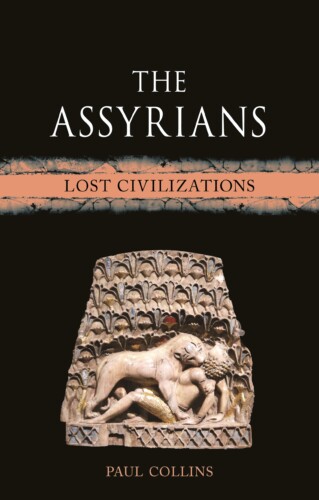
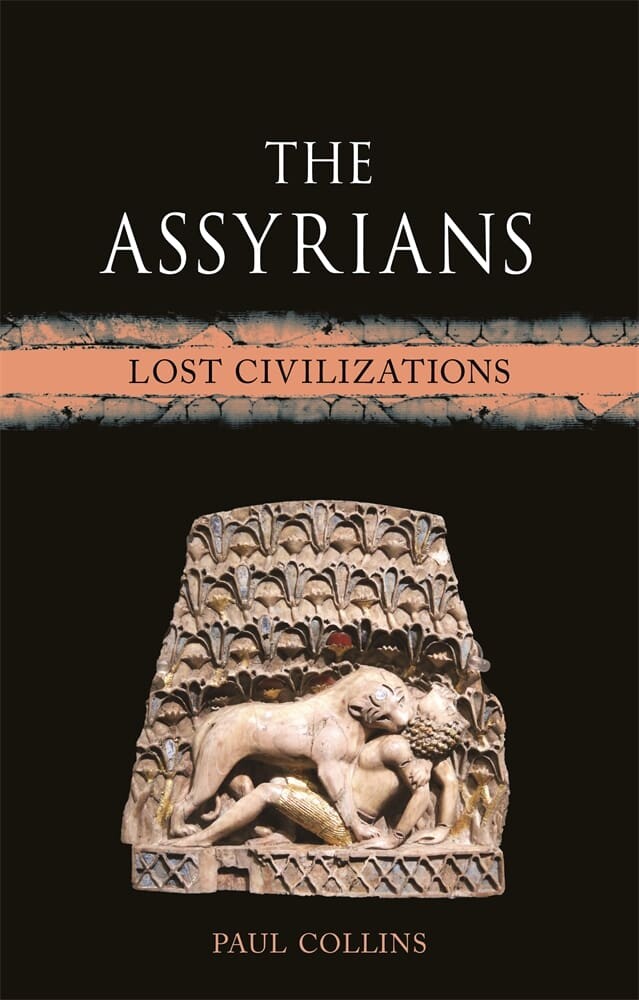
In this blog, author Paul Collins reflects on his new book, The Assyrians: Lost Civilizations.
***
Between 900 and 600 BC Assyria came to dominate by military force and administrative efficiency the region reaching from western Iran to Egypt. It was one of the world’s earliest empires, arguably the very first, ruling over large and diverse populations. The heart of Assyria was the city of Ashur on the river Tigris in what is today northern Iraq. This was home to the supreme god, also called Ashur, who was believed to appoint the Assyrian king as his earthly representative.
The city of Ashur has its origins around 2800 BC. Overlooking a ford in the Tigris, the settlement controlled both the traffic of boats up and down the river as well as donkey caravans moving from east and west along routes linking the fertile lands of Syria in the west with the equally rich agricultural lands of Babylonia to the south. As an important centre of trade, Ashur grew immensely rich during the 19th century BC, establishing a network of trading colonies deep into the highlands of what is today Turkey to exchange textiles and tin for gold and silver. As such, the geographic horizon of the Assyrians was already very broad by the time powerful states like Egypt, Babylonia and Hittite Anatolia were establishing extensive kingdoms by conquest around 1350 BC. Assyrian kings sought to join this ‘club’ of rulers by extending their control over neighbouring cities, including Nineveh (modern Mosul) and Arbela (modern Erbil).
As the kingdom grew into an empire during the first millennium BC, the royal family established new royal centres. Kalhu (modern Nimrud), Dur-Sharrukin (modern Khorsabad) and Nineveh were expanded in succession and transformed into magnificent cities with massive city walls, temples and palaces. This building work was made possible by labourers relocated in their tens of thousands from conquered regions of the Middle East. A system of royal roads linked the Assyrian capitals with the provincial centres and along which the king’s commands and messages from state officials, not least about the relocation of people, were rapidly transported. In this way Assyrian provincial governors were able to fill gaps in demand for agricultural workers and capital projects across the empire. Many deportees were settled in villages in the Assyrian heartland where they helped to construct canals bringing water to the cities and surrounding fields. The newly settled populations became Assyrian subjects by paying taxes to the crown but there was no attempt by the central authorities to impose their own culture, language, or religion.
The Assyrian royal family resided in splendour in their enormous palaces, surrounded by luxurious furnishings and objects made from precious materials. The walls of many rooms and courtyards throughout the principal palaces were lined with massive stone panels carved with painted imagery of the Assyrian king defeating his enemies in battle, reviewing lines of defeated people, undertaking rituals and hunting wild animals. Among these are some of the finest works of art to have survived from antiquity. They include the sculptures of Ashurbanipal at Nineveh, a king who placed knowledge alongside military force at the heart of his empire with the creation the world’s first universal library.
In the second half of the seventh century BC, a perfect storm brought the empire down. When Ashurbanipal died around 630 BC the empire had been exhausted by decades of conflict. Local rulers took advantage of the weakened centre, the Babylonians rebelled while Median armies from Iran plundered the cities. in 614 BCE, the Medes sacked Ashur, a hugely symbolic moment given it was Assyria’s religious and spiritual centre. Over the next five years, Nineveh, the last and greatest capital, as well other strongholds further west fell to invading armies until ultimately the ruler of Babylon seized what had been the Assyrian empire.
Assyria had established a blueprint for empire across the Middle East and a succession of powers followed their model: Babylonian, Persian, Macedonian, Parthian, Sasanian. Assyria became something of a backwater under these new regimes but local populations retained memories of the empire and its great cities through stories of kings like Ashurbanipal that continued to circulate among towns and villages of the region until today, inspiring artists to imagine and archaeologist to eventually uncover the physical remains of this extraordinary civilisation.
– Paul Collins
Paul Collins is Keeper of the Middle East Department at the British Museum. Specializing in the art and archaeology of Mesopotamia and Iran, his books include Mountains and Lowlands: Ancient Iran and Mesopotamia (2016) and The Sumerians (Reaktion Books, 2021).
You can buy The Assyrians from our online shop now.